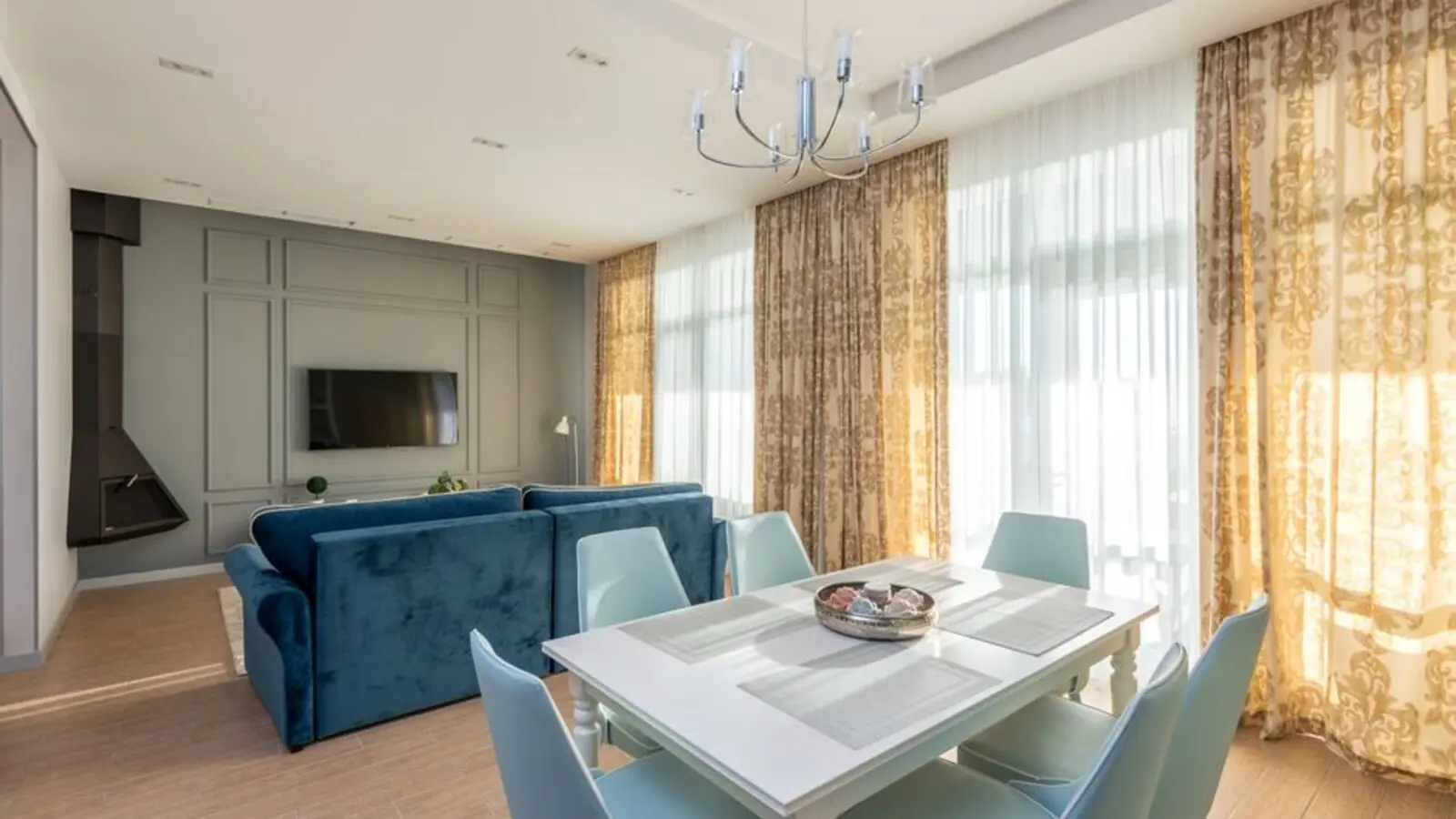
Refined living where Pune's IT energy meets timeless Oberoi craftsmanship.
Get DetailsFor decades this city wore its identity quietly, known to the world as a seat of learning and old-world charm. That gentler Pune still exists in its lanes and river-facing bungalows, but around it a far more restless city has grown. For decades, Pune has been celebrated as the “Oxford of the East”. However, as we move through 2026, the city has shed its quiet skin to become one of India's most dynamic urban landscapes. It is this duality, of heritage and hustle sitting side by side, that gives Pune's housing market its particular texture today.
The numbers tell a story of steadiness rather than spectacle. Residential sales saw a marginal dip of around 3 percent in 2025, reaching about 50,800 units, as buyers became more selective amid rising prices. Yet demand has not cooled so much as matured. Property registrations crossed 1.44 lakh between January and August 2025, showing a 13 percent annual increase. Early 2026 saw a brief pause, when property registrations declined by 17% year-on-year, dropping to 14,527 units in January 2026, compared to 17,449 units in January 2025, but this softness proved seasonal rather than structural, with month-on-month activity picking up soon after.
What has changed more meaningfully is what buyers are asking for. The most prominent shift is the move towards larger homes, with 3 and 4BHK units moving up from 20% to 29% of the new launches in 2025. Families are no longer settling for compact flats; they want room to breathe, a study corner, a balcony that catches the evening light. Correspondingly, the most significant property trend in Pune today is the shift away from standalone buildings toward large-scale integrated townships, as modern homebuyers look for ecosystems rather than just four walls.
For those weighing Pune against the country's other metros, the appeal is easy to articulate. For buyers priced out of Mumbai and Navi Mumbai, Pune continues to represent one of the most credible value propositions in Indian real estate: a large, growing, multi-employer city with a functioning social infrastructure and improving connectivity. Into this landscape, Oberoi brings its own quiet promise, of homes built not for a season's trend but for a lifetime's comfort.
Prices across Pune vary considerably by corridor, shaped by proximity to IT campuses, the airport, and the emerging Ring Road. Premium central pockets command a clear rental and resale premium over the western and eastern IT belts, while the city's outer fringes remain the entry point for first-time buyers.
Pune's growth story is really a collection of micro-market stories, each with its own rhythm of demand, connectivity, and price appreciation. Here are the corridors drawing the most homebuyer and investor attention.
A premium western corridor along NH-48 with strong retail, schooling, and metro access, favoured by professionals working the Hinjewadi IT belt.
Pune's most active real estate micro-market in 2026, anchored by the EON IT Park and World Trade Centre with over 11 million sq ft of office space.
Home to over 1,100 companies, this IT hub continues to be the single largest driver of housing demand in West Pune.
An established, leafy address near the airport and Koregaon Park, popular with senior executives and NRIs for its premium residences.
One of Pune's most storied addresses, known for tree-lined avenues, boutique dining, and some of the city's highest per-sqft values.
A well-connected mid-range corridor bridging Hinjewadi and the Mumbai-Pune Expressway, popular among young IT families.
Airport-adjacent locality with strong social infrastructure, malls, and a mature rental market.
The city's industrial backbone and its most affordable organised housing market, set to benefit from the Metro Phase 3 extension.
Much of Pune's current confidence rests on the infrastructure quietly taking shape around it. Steady end-user demand, a maturing premium segment, and major infrastructure projects converging — Metro, Ring Road, and the new airport — mean the window before their full impact gets priced in is genuinely interesting for buyers today. The Pune Metro's expanding lines are already reshaping commute patterns along the Hinjewadi–Shivajinagar and PCMC corridors, while the under-construction Ring Road promises to knit together the city's outer suburbs in a way that was never possible before. Beyond the Metro, the road network tells its own story of ambition. NH-48 and the Mumbai-Pune Expressway remain the arteries connecting western Pune to the rest of the country, and the upcoming Metro Phase 3 extension linking Pimpri Chinchwad to the Hinjewadi corridor will be a material appreciation catalyst for buyers who entered the market early. Layered on top of this is Pune's IT ecosystem itself, most visibly in Kharadi, whose office stock now runs into millions of square feet and continues to pull housing demand toward the eastern corridor. Together, these projects are steadily converting Pune from a well-connected city into a genuinely integrated one.
Fill in your details and our team will get back to you shortly with pricing, availability, and more.
The information here is shared in good faith for guidance alone and forms no part of any agreement. All figures, layouts, and images are subject to revision. Please confirm every detail with an authorised representative before proceeding. About · Projects
Share your details and our expert will call you back.